 |  |
         |
 Posted 9/2026 by Howard C. Dugan Have you ever noticed that when you enter a movie theater with modest expectations, you are often the one who emerges pleasantly surprised? There is, perhaps, a peculiar psychology at work here: the greater our expectations, the greater our susceptibility to disappointment. Expectation has a curious way of distorting perception. We do not merely experience an event; we experience it in comparison to the version of that event we had already constructed in our minds. This may explain why even the most lavishly orchestrated modern wedding - with its extravagant price tag and meticulously manufactured perfection - can somehow leave the bride feeling that something was missing. The phenomenon, of course, extends far beyond cinema or marriage. It appears throughout nearly every dimension of human experience. We establish an ideal, measure reality against it, and then wonder why reality so often comes up short. And there is an even more amusing paradox: some of the works now regarded as "cult classics" in film and music were initially dismissed, rejected, or critically misunderstood. What audiences eventually recognized as remarkable was, at first, perceived as mediocre - or even outright terrible. Perhaps the lesson is that expectation is not merely a measure of what we hope to receive; it is a lens through which we decide what we have received. |
 A CALL TO CHANGE THE STANDARDIZED KEYBOARD Posted 8/2026 by Larry Poindexter For decades, the standardized computer keyboard layout has been left largely untouched. While modern computers have advanced at an extraordinary pace, the keyboard, a device we use every day, still clings to conventions set in the era of typewriters and early computing. It's time we ask: why are we still struggling with inefficient design choices from decades ago? One of the biggest frustrations for users is the inconsistent placement of essential keys like the Delete and Print Screen buttons. On some keyboards, the Delete key hides above the arrow cluster; on others, it's jammed into the function key row, and sometimes it disappears entirely. The Print Screen button shifts even more wildly, it can be found next to F12, wedged above Insert, or worse, combined with another key requiring extra effort to use. For something as basic as capturing a screen or deleting text, why should users need to hunt and peck like archaeologists on every new machine? These are functions we use daily, and yet manufacturers treat their placement as an afterthought. A standardized, logical arrangement would save countless moments of frustration. The bottom row of the keyboard is another glaring issue. It's crowded with oversized keys that repeat across the layout - Ctrl, Alt, Windows/Command, and the spacebar dominate valuable space. Do we really need a spacebar that spans six keys in width when modern typing barely requires such excess? Imagine if this row were reimagined to include: - Dedicated emoji key (since digital communication relies so heavily on them). - Quick mute/unmute microphone button (essential in the age of video calls). - Clipboard manager key (to quickly access copied items). - Multimedia toggle (play, pause, skip without hunting for tiny function symbols). - Customizable smart key (users could assign it to any function they rely on). The potential productivity gains from rethinking this underutilized real estate are enormous. And then there's the infamous Caps Lock key. For decades, it has been the most misplaced and least-needed key on the board. Positioned right above Shift, it sits like a trap waiting to turn your carefully typed sentence into an accidental SHOUT. How many of us hit Caps Lock by mistake more often than we use it intentionally? This relic from the typewriter era might have been useful when ALL CAPS were common, but today, its prominence makes little sense. Why not move it to a less intrusive location, perhaps tucked near the function keys or in the extended right cluster? Or better yet, make it a programmable modifier key so users can assign it to something truly valuable. The irony is that while smartphones, tablets, and touch interfaces have evolved rapidly, the physical keyboard remains a stubborn fossil. Yet it doesn't have to be this way. A revised keyboard standard could balance familiarity with innovation, offering: - Consistent placement of universal keys (Delete, Print Screen, Insert). - Smarter use of the bottom row with practical, customizable keys. - Relegation or reprogramming of Caps Lock into something more useful. Such changes wouldn't alienate long-time users, they would empower them. Instead of wasting time fumbling for keys, users could focus on work, creativity, and communication. The current keyboard layout is not sacred. It was designed in an era when computers were massive machines, screens were monochrome, and the internet didn't exist. Today, our needs are entirely different. Isn't it time our keyboards caught up? Manufacturers, designers, and users alike should begin pushing for a new standard, one that reflects how we actually interact with computers in the modern age. Because the truth is, the keyboard isn't broken beyond repair. It just needs a thoughtful redesign that finally puts usability over tradition. |
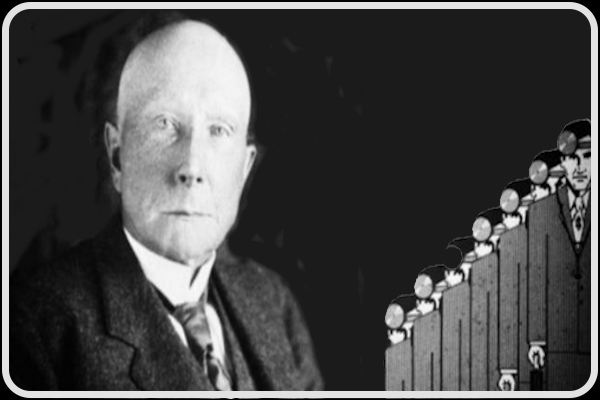 THE POLITICS OF SICKNESS Posted 7/2026 by Howard C. Dugan For more than a hundred years, the relationship between food, medicine, and economic power has been defined not only by scientific discovery but by the ambitions of industrial empires. The modern critique of a "food-pharma cartel" emerges from this tangled history - a history in which tobacco conglomerates, chemical processors, philanthropies, and governmental agencies all exerted gravitational force on what counts as legitimate healing and what becomes marginalized, discredited, or forgotten. While some of the more electrifying claims about coordinated conspiracies lack the evidentiary rigor they deserve, they nevertheless gesture toward real, documentable patterns: the commercialization of agriculture, the consolidation of biomedical authority, the political shaping of scientific narratives, and the uneasy coexistence between public health and corporate interest. The deeper story is not one of singular villains but of systems built on incentives - systems in which profit, pathology, and policy become interlocking components of a self-sustaining machine. Across the 20th century, the transformation of food was driven by the same forces that reshaped every other sector: scale, efficiency, shelf-life, and global distribution. Tobacco companies, confronted with the declining social acceptability of cigarettes, acquired processed-food brands. Chemical manufacturers repurposed wartime innovations - synthetic fertilizers, pesticides, and preservatives - into agricultural technologies. By mid-century, "factory food" had become the emblem of modernity: convenient, durable, intensely flavored, and progressively detached from traditional nutritional wisdom. This evolution was in-fact engineered with the explicit aim of addiction and illness. The combination of industrialized ingredients - refined sugar, hydrogenated oils, artificial flavor systems - created products optimized for repeat consumption. Neuroscientists now describe these formulations as "hyperpalatable," provoking reward pathways in ways ancestral foods rarely did. The result was an unprecedented rise in metabolic diseases: type 2 diabetes, rampant obesity, non-alcoholic fatty liver disease, and cardiovascular pathology. When profits flow from high-volume consumption, the healthiest foods - those with the lowest margins - inevitably recede from the marketplace. The medical revolution of the early twentieth century is often traced to the 1910 Flexner Report, commissioned by the Carnegie Foundation. The report exposed the uneven quality of medical education and recommended a sweeping standardization modeled on laboratory science. Yet the reforms had consequences: schools rooted in botanical, homeopathic, or eclectic traditions were shuttered, not because they were uniformly ineffective, but because they did not conform to the newly ascendant biomedical model. What had previously been a pluralistic field narrowed into a singular orthodoxy - one increasingly interwoven with philanthropic and industrial patronage, most notably from the Rockefeller Foundation. Rockefeller's investments in "scientific medicine" aligned with the era's faith in chemistry: synthetic pharmaceuticals, standardized dosing, laboratory diagnostics, and antiseptic surgery. These were genuine advances. But they also concentrated authority in institutions that could marshal capital, laboratories, and industrial partnerships. Over time, dissenting therapeutic paradigms - nutritional, botanical, energetic, or integrative - were demoted to the periphery of "unscientific" or "unproven," even when evidence remained incomplete rather than disqualifying. Thus a paradox emerged: the very standardization that improved medical training also reduced the space in which alternative theories could be explored. In the mid-20th century, the FDA assumed enormous responsibility for protecting the public from fraudulent or dangerous treatments. This mission was, and remains, essential. Yet the power to decide which therapies are considered legitimate also grants the power to silence or preclude others - sometimes prematurely, and sometimes under the influence of external pressure. Whether justified or not, each regulatory prohibition reinforced a narrative of medical paternalism: that citizens were not qualified to choose their own risk profile, that heterodox ideas must be extinguished rather than tested, and that institutional authority supersedes personal agency. Modern medicine excels at crisis intervention but struggles with chronic metabolic disease - conditions profoundly influenced by diet, environment, socioeconomic status, and long-term lifestyle patterns. Pharmaceutical companies responded to this landscape with treatments that manage, but rarely cure: antihypertensives, lipid-lowering agents, glucose-regulating drugs, lifelong hormone therapies. The economic structure of chronic disease - predictable, long-term, insurance-reimbursed - creates incentives misaligned with prevention. Meanwhile the processed-food industries, which contribute to the underlying pathology, continue to thrive. The result is a feedback loop: industrial food drives disease; pharmaceutical medicine manages its symptoms; neither sector is fundamentally rewarded for reducing the prevalence of sickness itself. From the perspective of systemic critique, this constellation of incentives resembles a "sickness industry" because the financial logic of the system gravitates toward maintenance rather than resolution. Censorship - whether through institutional pressure, regulatory exclusion, or reputational marginalization - has a paradoxical effect. Efforts to suppress nonconforming medical ideas often amplify them, transforming them from hypotheses into symbolic protests against centralized power. Over time, the public comes to equate institutional certainty with institutional overreach. The rise of digital media has intensified this dynamic: once-obscure criticisms of industrial agriculture, pharmaceutical interests, and regulatory agencies now circulate widely. Yet the deeper issue is not the existence of dissent, but the conditions that made dissent inevitable: opaque decision-making, conflicts of interest, slow adaptation to emerging science, and the lingering suspicion that the official story is not the whole story. If the twentieth century was defined by the ascendance of biomedical authority, the twenty-first is marked by its crisis of legitimacy. |
 RALLY AROUND THE FLAG Posted 6/2026 by Anonymous In the wake of the September 11 attacks, the psychological mechanism known as "Rally Around the Flag" was deliberately leveraged to transform public fear and anger into political support for the so-called War on Terror. This tactic proved highly effective at that time. However, the American public has shown far less enthusiasm for the latest military aggression pursued by what the author terms the bloodthirsty American Empire and the Zionist-led Greater Israel Project. That level of opposition, though, is fragile. According to the Project for a New American Century (PNAC) - which explicitly called for a "catastrophic and catalyzing event, like a new Pearl Harbor" to galvanize war support - such an event may soon be necessary. Absent a major shock, mobilizing the populace remains difficult. Therefore, one should anticipate such an event in the near future. Famines and energy lockdowns are reportedly imminent as part of the broader design, but a spark will soon be required to ignite this fire. Mark my words, you can count on these psychopaths to be that predictable... |
THE ARCHITECTURE OF DEPENDENCE Posted 5/2026 by Howard C. Dugan The modern West has woven technology so deeply into daily life that convenience has quietly transformed into vulnerability. As tools grow in sophistication, individuals often relinquish skills that once anchored personal autonomy. In this environment, citizens increasingly look to centralized institutions - especially the State - to mediate crises, manage risks, and even interpret reality. Such a dynamic creates an opportunity: any group aspiring to consolidate influence over society would begin by capturing the technological levers upon which people now depend. To understand this dynamic, one can examine five strategic domains that shape contemporary life: communication, health and the body, privacy, finance, and the instruments of force. For generations, communication systems have been subject to monitoring, but the digital era has elevated this into a nearly continuous form of observation. Messages, movements, and metadata are captured, categorized, and interpreted by algorithms designed to map social behavior. While the rhetoric of safety and efficiency often frames these tools, the capacity for guidance can shift subtly into the capacity for manipulation. Whoever governs the channels through which information flows inevitably gains influence over what people believe, prioritize, and fear. The next frontier reaches inward - toward the human body itself. Wearable sensors, biometric devices, implanted technologies, and data-driven health platforms are collectively forming what has been called the "Internet of Bodies." Benefits such as personalized medicine and continuous monitoring carry a parallel risk: the possibility that health data becomes not only a commercial commodity but also a mechanism of control. If one's biological metrics are cataloged by external authorities, one's physical autonomy can be shaped by digital systems that determine access, permission, and status. As these technologies proliferate, privacy - the once-sacred buffer between self and society - becomes porous. The decline of privacy is not merely a technical issue; it is a political one. When individuals internalize the expectation of surveillance, they adjust their behavior accordingly. The private sphere shrinks, and the space required for dissent, creativity, and genuine freedom begins to contract. A society without meaningful privacy becomes one in which people exist in a continuous performance, never entirely sure who is watching. Parallel to these trends is a financial system that, for all its apparent sophistication, is acutely fragile. Much of modern banking rests on layers of abstraction - debt, derivatives, and digital transactions - which function smoothly only so long as trust holds. Any significant disruption, whether economic, political, or technological, can expose underlying instability. Should the financial structure falter, the ripple effects would reach every corner of society, from supply chains to employment, to basic necessities. When systemic shocks ripple outward, the final domain inevitably comes into play: the institutions of force and security. Historically, when complex societies encounter periods of disorder - economic collapse, mass unrest, or technological breakdown - the military or security apparatus often intervenes to impose order. This represents a paradox: digital dependence creates digital vulnerabilities, but the solutions available during a crisis tend to be aggressively analog. Where systems break, authority fills the vacuum. Taken together, these five domains reveal an architecture of dependence. The more thoroughly technology mediates human life, the more crucial it becomes to consider who governs those systems, who designs their limits, and who determines their access points. The question is not whether technology is inherently detrimental - it has elevated human achievement in countless ways - but whether societies can maintain resilience, independence, and dignity while integrating tools that also centralize power. |
A MEAT SHOWER IN KENTUCKY Posted 4/2026 by Howard C. Dugan On the morning of March 3, 1876, something extraordinary happened on a quiet farm in rural Kentucky. A grandmother and her young grandson were doing chores in their yard when the sky suddenly began dropping chunks of raw flesh. For several minutes, bloody pieces of animal tissue fell from a perfectly clear sky onto a section of land about the size of a football field. The bizarre event occurred on a farm belonging to the Crouch family in what is now Bath County, and it would later become one of the most puzzling and best-documented mysteries in American history. More than 150 years later, the story still fascinates historians, scientists, and mystery enthusiasts alike. That morning, Rebecca Crouch was about forty steps from her house, preparing to build a fire beneath a large cast-iron vat used for soap making. Nearby, her ten-year-old grandson Allen was helping around the yard. Suddenly, the boy looked up and shouted: "Why, Grandma, it's snowing!" But what began falling from the sky wasn't snow. Instead, bloody chunks of raw meat started dropping from above, striking the ground with what Rebecca later described as a snapping sound. The pieces landed across an area roughly 100 yards long and 50 yards wide, covering fences, outbuildings, and open ground around the farm near Olympia Springs. Rebecca later told a reporter from the New York Herald: "The skies were clear and the Sun was shining brightly. There was a light wind coming from a westerly direction. Without any prelude or warning...the shower commenced." Most of the pieces were about two inches across, though some chunks measured as large as four inches. When the strange downpour finally stopped, the Crouch family had gathered enough meat to fill a wagon. To them, the event seemed like a sign from heaven. News spread quickly through the countryside. Curious neighbors traveled to the farm to see the bizarre scene for themselves. One visitor, described the smell as "offensive to the extreme, like that of a dead body." And because this was 1876 rural Kentucky, some witnesses decided to do the unthinkable: They tasted it. Different people gave wildly different descriptions. Some claimed the meat resembled mutton or venison, while others compared its texture to veal or lamb. One person thought it might be bear meat, while another insisted it looked like pounded beefsteak. Several observers noted a milky or watery fluid seeping from the flesh. The strange event quickly became national news, and samples were sent to scientists across the country for analysis. Pieces of the mysterious substance were preserved in alcohol and glycerin and shipped to laboratories in Kentucky, Ohio, and New York. One early analysis claimed the material wasn't meat at all. A water analyst suggested it was nostoc, a type of gelatinous cyanobacteria sometimes called "star jelly" or "witch's butter." This organism can swell dramatically after rainfall and sometimes appears suddenly on the ground. But there was a problem. The sky had been completely clear that day. There had been no rain, and the samples didn't behave like bacterial colonies. Further microscopic examinations told a different story entirely. Scientists finally concluded the pieces were animal tissue. Some samples resembled lung tissue, while others appeared to be muscle and cartilage from the chest or abdominal walls of a large mammal. In total, seven samples were studied. Their classifications included: - Two samples of lung tissue - Three samples of muscular tissue - Two samples of cartilage The conclusion was unavoidable: The material was real animal flesh. But that only deepened the mystery. Once it was confirmed that the substance truly was meat, speculation exploded. One humorous suggestion published in the The New York Times joked that the meat might be "cosmic meat" - fragments of animals from an exploding planet drifting through space. Needless to say, that theory wasn't taken seriously. Another idea suggested the event might be related to a known meteorological phenomenon called animal rain, in which strong updrafts or waterspouts lift creatures into the sky and deposit them miles away. Events like this have been documented throughout history. In fact, fish and frogs famously fell from the sky during storms in Yoro in 1998. However, the Kentucky event had one major inconsistency: There was no storm. The skies were calm and clear when the meat began falling. One modern hypothesis proposes that a flock of vultures may have been responsible. Vultures sometimes regurgitate partially digested food when startled or when they need to lighten their weight quickly during flight. If a large group of birds happened to vomit simultaneously while flying overhead, it could theoretically produce a brief "shower" of meat. But even that explanation remains speculative. Alternatively, because the witness testimony had claimed that the lung tissue and cartilage fell from the sky, is it possible that the little green men are meat eaters after all? After all this would account for the discarding of the unpalatable tissue. For decades, the strange incident faded into folklore. But one physical reminder of the event survived: a small vial containing a preserved piece of flesh labeled "Olympia Springs." Today, the specimen is kept at the Transylvania University, inside the Monroe Moosnick Medical and Science Museum in Lexington. Modern scientists attempted to analyze the sample using DNA testing, hoping that modern genetics might finally solve the mystery. Unfortunately, the attempt failed. The tissue was too old and too contaminated by preservation chemicals to produce a reliable genetic result. The Kentucky Meat Shower of 1876 remains one of the strangest documented events in American history. The evidence shows that something very real happened that morning on the Crouch farm. Chunks of animal tissue truly did fall from the sky over Bath County. But the most important question remains unanswered: Where did it come from? Even after a century and a half of speculation, scientific testing, and folklore, the Kentucky Meat Shower still sits right on the edge between explanation and mystery. And sometimes, history leaves us with stories that are just too strange to fully understand. |
 WHAT HAPPENS IF HUMANITY LEARNS IT IS NOT ALONE? Posted 3/2026 by Howard C. Dugan Humanity likes to believe it understands its own story. We build timelines, teach history in classrooms, and reinforce shared narratives through documentaries, textbooks, and cultural traditions. Yet when we step back, an uncomfortable realization emerges: much of what we accept as certainty is interpretation rather than absolute knowledge. Our collective understanding of the past is shaped by surviving records, dominant institutions, and cultural storytelling. Popular imagination fills the gaps with science fiction films, speculative literature, and mythologies that blur the boundary between possibility and fantasy. In many ways, history becomes less a fixed record and more a consensus reality - a story agreed upon because it provides stability. But what if that stability were suddenly disrupted? What if humanity were confronted with undeniable proof that non-human intelligence has influenced Earth? This question is not merely science fiction. It is a psychological and sociological thought experiment - one that scholars, governments, and policy planners have quietly considered for decades. Every civilization operates within a framework of assumptions. These assumptions define humanity's place in the universe, its origins, and its perceived uniqueness. They shape religion, philosophy, economics, and even personal identity. A sudden revelation challenging those assumptions would not simply add new information; it would force a restructuring of meaning itself. Writer and researcher Charles Fort once captured this unsettling possibility in a stark observation: "The Earth is a farm. We are someone else's property." - Charles Fort Whether taken literally or metaphorically, the quote reflects a deeper anxiety - that humanity may not occupy the central role in existence that it assumes. The shock would not come solely from discovering non-human intelligence, but from realizing humanity's story might be incomplete. The real question becomes psychological rather than technological: how does a species react when its worldview collapses overnight? During the early space race, policymakers began asking exactly that question. In 1961, the Brookings Institution prepared a report for NASA examining the broader societal implications of space exploration. Often referred to as the "Brookings Report," the study was not focused on aliens themselves but on human behavior. Its central concern was simple: how would society respond if extraterrestrial intelligence were discovered? The authors explored historical parallels, noting that when technologically unequal civilizations encountered one another on Earth, the results were rarely neutral. Less advanced societies often experienced cultural upheaval, loss of identity, or rapid transformation. Belief systems fractured. Social hierarchies shifted. Entire worldviews dissolved within a generation. The report suggested that confirmation of intelligent extraterrestrial life could produce similar effects on a global scale. Human beings are remarkably adaptable - but adaptation usually occurs gradually. Scientific revolutions like heliocentrism or evolution took decades or centuries to integrate into mainstream thought. Even then, resistance was intense. A sudden global announcement confirming non-human intelligence would compress centuries of philosophical change into a single moment. POSSIBLE REACTIONS MIGHT INCLUDE: - RELIGIOUS AND PHILOSOPHICAL REINTERPRETATION: Many spiritual traditions would face profound questions about humanity's uniqueness and purpose. Some belief systems might expand to incorporate new realities, while others could fracture under internal disagreement. - EXISTENTIAL ANXIETY: Individuals derive meaning from identity - national, cultural, and human identity itself. Learning that humanity is not alone, or not dominant, could trigger widespread uncertainty about purpose and agency. - SCIENTIFIC RENAISSANCE: Conversely, disclosure could ignite unprecedented curiosity. Entirely new sciences, technologies, and fields of study might emerge, accelerating human progress. - SOCIAL INSTABILITY - OR UNITY - THE BROOKINGS ANALYSIS SUGGESTED TWO COMPETING POSSIBILITIES: 1. Societies could destabilize under psychological stress. 2. Humanity could develop a stronger shared identity - a "oneness of man" - redefining divisions between nations as insignificant compared to a larger cosmic context. HISTORY SUGGESTS BOTH OUTCOMES COULD OCCUR SIMULTANEOUSLY... One of the more sobering conclusions of the study was that geopolitical competition might continue largely unchanged. Even in the face of a universe-altering discovery, nations could still compete for technological advantage, strategic leverage, or access to new knowledge. Human nature does not automatically transform because new information appears. Old incentives often persist. In other words, disclosure might unite humanity philosophically while dividing it politically. A central question raised by policymakers was not whether disclosure should occur, but how and when. Information delivered too abruptly can overwhelm collective psychology. Gradual exposure allows societies to adapt narratives over time. Cultural acceptance often precedes official confirmation - a slow acclimation process through media, entertainment, and scientific discussion. From a social-science perspective, disclosure is less an event than a transition. The challenge for leaders would be balancing transparency with stability: telling the truth while preventing panic, misinformation, or institutional collapse. If humanity successfully integrated such knowledge, the long-term effects could be transformative. Instead of defining ourselves primarily by nationality, ideology, or culture, humanity might begin to see itself as a single planetary civilization - a species among many rather than the center of existence. THIS SHIFT COULD RESHAPE PRIORITIES: - GLOBAL COOPERATION OVER COMPETITION - LONG-TERM PLANETARY STEWARDSHIP - EXPANDED EXPLORATION BEYOND EARTH - A PHILOSOPHICAL MATURITY GROUNDED IN COSMIC PERSPECTIVE IRONICALLY, DISCOVERING "THE OTHER" MIGHT FINALLY HELP HUMANITY UNDERSTAND ITSELF. The final question remains unresolved. Modern society is more interconnected than ever, yet also more polarized. Information travels instantly, but trust in institutions fluctuates. Humanity possesses extraordinary technological power while still grappling with ancient psychological fears. - WOULD REVELATION CAUSE PANIC - OR ENLIGHTENMENT? - WOULD BELIEF SYSTEMS COLLAPSE - OR EVOLVE? - WOULD HUMANITY FRAGMENT - OR UNITE? As science is expands our understanding of the universe and our culture increasingly entertains the possibility of non-human intelligence, society may be slowly rehearsing for a reality shift long before any official announcement occurs. The deeper question may not be whether disclosure happens, but whether humanity can redefine itself quickly enough when confronted with a universe far larger - and potentially far more populated - than it ever imagined... |
 FIFTY SHADES OF HYPOCROCY Posted 2/2026 by Mikey Brewer Romance novels have long been a staple in popular culture, often referred to as "mommy porn" due to their focus on emotional and intimate fantasies. But are these stories really any different from more explicit content often consumed by men, like pornography? The lines between emotional and physical desires may be more blurred than we think. Below, we'll explore how romance novels and pornography function similarly, the nature of female and male fantasies, and the societal double standards that contribute to the perception of "mommy porn being acceptable." Both romance novels and traditional pornography are designed to fulfill a similar purpose: stimulating desire. Romance novels do this through intricate storytelling and deeply developed emotional connections between characters. They often highlight love, affection, and passion, with steamy scenes woven into the narrative as a culmination of the characters' feelings. In contrast, pornography often focuses on the physical act itself, providing a more direct and visual approach to sexual arousal. But at their core, both serve as outlets for desire. Romance novels may evoke a feeling of intimacy and longing in their readers, while pornography caters more to the visual and immediate. Essentially, they both explore fantasies, but in different ways. The key difference lies in how society has chosen to perceive and judge these expressions of desire. Much of the debate centers around the claim that women's imagination is fundamentally different from men's visual desires. But is that really true? When women read romance novels, they immerse themselves in scenarios that trigger a mental response. The detailed descriptions, character development, and deep emotional connections in these novels are all crafted to stimulate a woman's mind and emotions. This mental engagement is not so different from how a man might engage visually with explicit content, finding pleasure in the images presented. For men, visual cues can trigger arousal quickly, while for many women, the emotional journey and the mental landscape set by a romance novel can be equally compelling. In both cases, the end goal is the same: a heightened state of desire and satisfaction. To claim that one is more "pure" or "valid" than the other dismisses the fact that both are simply different expressions of human sexuality. One crucial distinction often made between romance novels and traditional pornography is the element of exploitation. In pornography, concerns about the exploitation of actors and unethical production practices are valid and widespread. There are numerous cases where people in the industry have been subjected to unfair treatment, coercion, and lack of consent. This creates a moral dimension to the consumption of such content that cannot be ignored. In contrast, romance novels are works of fiction - no one is physically involved or harmed in their creation. The authors have full control over their characters and stories, and readers engage with these fantasies in the privacy of their own imaginations. For many, this makes the consumption of romance novels a less morally fraught activity, providing a way to explore desires without contributing to an industry that may have ethical issues. However, it's important to note that romance novels can still perpetuate unrealistic ideals about love, relationships, and desire, much like how pornography often portrays unrealistic depictions of sex. Both have the potential to shape expectations that may not align with reality, though their impacts differ in how they manifest in the lives of their consumers. Romance novels and traditional pornography are both outlets for human fantasy, and each serves a unique purpose in the realm of desire. The double standards applied to these forms of entertainment highlight broader societal issues regarding how male and female sexualities are perceived and judged. By understanding the similarities between them and challenging the existing stereotypes, we can move toward a more inclusive view of human desire - one where fantasies, whether visual or imaginative, are not subject to judgment but are accepted as natural expressions of human curiosity and passion. |
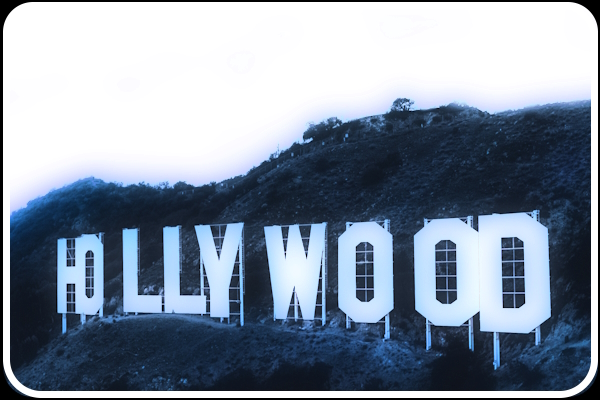 AT THE PRECIPICE OF MYTH
Hollywood has always sold the world an illusion - of glamour, charisma,
and the near-divinity of performers capable of transforming themselves
at will. Yet beneath that shimmering façade lies a truth the industry
has managed to obscure for over a century: celebrity is not a natural
resource, nor a divine gift, but a manufactured commodity. Now, for the
first time, a technology has appeared that exposes this fragility with
mathematical clarity. Digital actors - algorithmically generated
performers - are forcing Hollywood to confront what it has most feared:
that the essence of acting may not be as irreplaceable, human, or
exclusive as was long believed.Posted 1/2026 by Mikey Brewer Actors, agents, studios, and fans are not wrong to sense panic. They are witnessing the beginning of a cultural inversion in which the idea of the actor matters more than the actor themself, and the simulacrum threatens to outshine the original. When the actors and writers walked off their sets, they did more than protest working conditions; they created the perfect stage on which artificial performers could make their entrance. No director struggles with a virtual actor's schedule, temperament, or contract negotiation. No insurance company worries about injuries. No production halts because of exhaustion, scandal, or a sudden stint in rehab. The digital performer appears when summoned, delivers lines without complaint, and vanishes without emotional residue the moment a scene is complete. Human beings are magnificent, but they are also inconsistent. They get sick. They burn out. They demand. They dream. And while these traits make us complex, they also make us expensive. A synthetic performer, by contrast, has none of the vulnerabilities that complicate the human workforce. It does not suffer addiction. It does not fatigue. It does not require million-dollar trailers or residual negotiations that stretch across decades. It is, from the perspective of a studio executive, the perfect worker - infinitely available, infinitely scalable, infinitely compliant. It is not difficult to imagine the threshold at which audiences begin preferring the immaculate to the merely human. Artificial performers will not only mimic humanity - they will refine it, stylize it, perfect it. Their expressions will be calibrated to every frame, their movements choreographed with geometric precision, their emotional arcs tuned to the exact narrative frequency that keeps viewers entranced. "Humans have good days and bad days; algorithms do not..." - Thomas Smith And when digital actors are capable of building authentic rapport with audiences - charming, witty, vulnerable, and infinitely adaptable - the traditional model of the celebrity collapses. Why reuse the same handful of actors in every blockbuster when each film can feature a cast sculpted specifically for its world, tone, and artistic vision? Each project becomes a self-contained artistic organism, with characters that exist only within its borders. The democratization of creation follows naturally: films become cheaper, experimentation becomes safer, and the tyranny of the "star system" dissolves. Hollywood has long insisted that its budgets are astronomical because talent demands it. A.I. punctures this myth instantly. The greatest illusion Hollywood ever sold was the belief that its system was immutable. Yet technological disruption rarely asks for permission. It arrives, asserts itself, and becomes indispensable before its opponents realize the battle is lost. People once said photography would never replace portraiture, that digital cameras would never surpass film, that streaming would never dethrone theaters. Industries anchored to tradition always underestimate the velocity of change. The shift to A.I.-driven performance will not be gradual. It will be abrupt, driven by economics, accelerated by precedent, and cemented by audience acclimation. Within a single generation, the notion of "human exclusivity" in acting may feel quaint, like insisting all books must be written by hand or all music performed live. Hollywood stands on the edge of its own metamorphosis. The question is not whether digital actors will emerge victorious, but how quickly the culture adapts to a new form of storytelling - one in which the performer is not a person but a possibility. The heroes, villains, lovers, and legends of the future may never breathe, but they will echo the intelligence of their creators and the desires of their audiences. And in that sense, they may reveal more truth about us than any flesh-and-blood star ever could... |

Copyright Disclaimer