
| The views and perspectives expressed (herein) are a representation of the beliefs of Mikey Brewer and contributing authors and these views are not intended to be taken seriously. The material here is absolutely hypothetical and is only meant for debate and since we are critically-thinking human beings these views are always subject to revision and change. This blog should not be used as a foundation in life decisions and there is no guarantee given regarding the accuracy of any statements within this blog... |



 Posted 12/2025
Did you know that you can't dream about a person unless you've
seen them somewhere. Every face you've ever dreamed about is one you've
seen at some point in your life. "Now I'm starting to wonder about all
of those aliens in my dreams..."by Mikey Brewer |
ENGINEERING THE SUBCONSCIOUS Posted 11/2025 by Howard C. Dugan Targeted Dream Incubation (TDI) is an emerging methodology aimed at steering the content of dreams toward specific themes or ideas. This process utilizes stimuli, such as sounds or scents, delivered at specific stages of sleep to subtly influence the direction of dream content. A notable feature of TDI involves exploiting a semi-conscious state called hypnagogia, the transitional phase between wakefulness and sleep. This stage allows for heightened receptivity to external cues while the brain starts to drift into a dream-like state. TDI operates primarily during the NREM Stage 1 (N1) phase of sleep. In a controlled setup, individuals wear devices like Dormio, which monitor sleep cycles. Once the system detects the onset of sleep, it plays auditory prompts (e.g., specific words like "rabbit") to seed mental images that become part of the dream. These interventions are followed by brief awakenings, enabling subjects to articulate and record their dream experiences before deeper sleep erases them from memory. The cycle repeats, creating opportunities to refine the thematic content of the dreams. Unlike Targeted Memory Reactivation (TMR), which uses sensory cues to strengthen memory consolidation, TDI focuses on actively shaping the subjective experience of dreams. While TDI can enhance creativity, memory, and introspection, its applications extend to therapeutic domains, including combating nightmares associated with trauma and fostering creative ideation. TDI's potential to subtly embed themes and ideas into dreams could be exploited by commercial entities to manipulate consumer behavior. Imagine a scenario where a corporation uses TDI technology to implant product-related imagery into the dreams of consumers. For example, auditory cues like "drink X soda for happiness" could unconsciously influence purchasing decisions upon waking. Over time, this could lead to a profound erosion of personal autonomy, with people unknowingly becoming conduits for consumerism while in their most vulnerable state. Governments or organizations could misuse TDI for psychological manipulation or propaganda. By implanting specific narratives or ideologies during hypnagogic states, they could subtly influence beliefs or attitudes without the sleeper's conscious awareness. This could pave the way for unethical forms of brainwashing, undermining critical thinking and freedom of thought. TDI relies on detailed monitoring of sleep patterns and dream reports, potentially collecting sensitive personal data. If mishandled or hacked, this data could expose individuals to privacy breaches, with their innermost thoughts and vulnerabilities being exploited for profit or manipulation. In therapeutic settings, TDI could be a double-edged sword. While it holds promise for treating nightmares or enhancing creativity, improper use could exacerbate trauma or lead to unintended psychological side effects. In the hands of untrained practitioners, TDI might yield harmful outcomes instead of healing. If TDI becomes a widely used tool for creativity and problem-solving, individuals might grow overly reliant on artificially induced dream states. This could diminish the value of organic creativity and self-reflection, fostering a dependency on external devices for internal growth. Corporations could develop targeted advertisements that infiltrate dreams, while political campaigns might attempt to shape voter attitudes subliminally. For instance, repeated exposure to cues associating a candidate with positive imagery during sleep could influence public perception without explicit awareness. While TDI represents a groundbreaking advancement in neuroscience, its potential for misuse raises critical ethical and societal questions. The ability to influence dreams could empower individuals to enhance creativity and introspection, but it also poses significant risks of exploitation... |
A CALL TO STANDARDIZE THE MODERN TV REMOTE Posted 10/2025 by Larry Poindexter In an era where technology has streamlined nearly every aspect of our daily lives, the humble television remote remains a relic of unnecessary complexity and inconsistency. Whether you've bought a brand-new smart TV, upgraded your sound system, or simply switched streaming devices, chances are you've found yourself surrounded by a cluttered collection of remotes - each with its own unique (and often confusing) layout. It's time we ask an important question: why hasn't the modern TV remote been standardized? Unlike smartphones, which have largely converged toward a familiar and intuitive interface, television remotes remain chaotic. Each manufacturer seems intent on reinventing the wheel, creating button-heavy devices that often require a lot of guesswork. Some common frustrations include: - Overloaded Buttons - Rows of tiny, rarely-used buttons (like "CC," "SAP," or "Zoom") make navigation cumbersome. - Brand Lock-In - Many remotes are optimized only for a manufacturer's proprietary ecosystem, leaving consumers juggling multiple controllers for one entertainment setup. - Inconsistent Layouts - Power, volume, and input buttons may shift positions depending on the brand, forcing users to relearn basic functions. - The result? A user experience that feels outdated, frustrating, and at odds with the sleek, intuitive design of modern entertainment systems. The case for standardized remotes is the same case that once drove the adoption of universal charging cables, keyboard layouts, and traffic symbols: efficiency, consistency, and user-friendliness. - Ease of Use - Standard button placement (power, volume, input, navigation, and home) would eliminate confusion, making remotes universally familiar. - Reduced Waste - Instead of throwing away multiple remotes when upgrading hardware, consumers could reuse a single universal standard. - Accessibility - Standardized designs could include guidelines for ergonomics, readability, and tactile recognition, helping children, seniors, and people with visual impairments. - Sustainability - A universal standard would curb electronic waste by reducing the need for duplicate or proprietary controllers. In essence, standardization would transform remotes from clunky relics into intuitive, universally understood tools. A modern, standardized TV remote doesn't need to be minimalist to the point of uselessness, but it should reflect today's entertainment habits. Key features might include: - Core Buttons Only Power, volume, channel up/down, input/source, directional pad, home, back, and select. - Dedicated Streaming Controls Universal buttons for "play/pause," "fast forward," and "rewind," usable across all streaming platforms. - App-Based Shortcuts Instead of hardcoding Netflix or Prime Video, allow programmable buttons that users can assign to their preferred apps. - Universal Compatibility Built-in standards (like HDMI-CEC and Bluetooth) that let the remote work across TVs, soundbars, and other streaming devices. - Accessible Design Larger, clearly labeled buttons; optional voice input; tactile markers for navigation; and backlighting for low-light viewing. Think of it as the "QWERTY keyboard" of remotes: universally familiar, reliable, and intuitive. The challenge, of course, is that manufacturers benefit from proprietary designs that keep users tied to their ecosystems. A Samsung remote won't seamlessly control a Sony soundbar, and an LG remote isn't designed for Roku navigation. This is where industry standards, or even government regulations - can play a crucial role, much like they did with USB-C charging in the European Union. A standardized TV remote protocol would ensure interoperability, while still leaving room for manufacturers to innovate around advanced features like gesture control or haptic feedback. While the remote remains central today, voice assistants, smartphone apps, and even AI-driven automation are reshaping how we interact with TVs. However, until these technologies fully replace physical remotes, standardization is the best step forward. A universal standard would bridge the gap between old habits and new innovations, creating a smoother transition toward the entertainment interfaces of the future. For too long, consumers have tolerated a confusing, fragmented landscape of TV remotes. In a world where technology promises simplicity, the remote remains a stubborn holdout of clutter and frustration. The solution is clear: we need a standardized modern TV remote. Not one brand's vision, but a universal design that prioritizes usability, accessibility, and sustainability. Because in the end, watching TV should be effortless, not a scavenger hunt. |
THE NORMIES GUIDE TO RADICAL THOUGHT Posted 9/2025 by MADMAN MIKEY BREWER Radical thought, encompassing a wide range of ideas and perspectives that challenge societal norms and propose transformative change, has significantly influenced political, cultural, and philosophical domains throughout history. From left-wing movements like socialism and anarchism to right-wing ideologies such as fascism and white nationalism, radical thought questions existing power structures and seeks to reimagine society. It also manifests in cultural expressions like art, literature, and music, where avant-garde movements and subcultures challenge mainstream values and promote alternative lifestyles. In the digital age, radical thought has found new platforms through the internet and social media, facilitating online activism and cyber radicalism. While these technologies offer new opportunities for mobilization and advocacy, they also pose challenges such as increased surveillance and the spread of misinformation. Emerging issues like climate change, technological advancements, and global inequality continue to inspire new forms of radical thought, urging society to address pressing ethical questions and systemic injustices. The future of radical thought depends on education, interdisciplinary studies, and coalition building, fostering critical thinking and collaboration across diverse movements. By questioning the status quo and proposing bold alternatives, radical thinkers and activists drive social, political, and cultural change. Embracing radical thought encourages envisioning a more just, equitable, and sustainable world, highlighting the importance of continuous dialogue, debate, and collective action in shaping a better future. |
 UNITED WE STAND, DIVIDED WE FALL Posted 8/2025 by Howard C. Dugan Did you ever have the impression that someone is out to get you? In reality, they are, and this will become more apparent as we work to expose the century's long plan for world domination by the psychopaths that are running this entire planet. We chuckle at how absurd it all is and the possibility that we, the little guys, could have some ideas on how to thwart their schemes. The top 1% have divided us all and hedged their bets by presenting their viewpoints in every opposing argument. By keeping us in the dark and engaging us in self-defeating behavior, they are succeeding as they always have. We must act, and expose their schemes for gaining global dominance before it is too late. Consider this quote from Thomas Smith "Look to where your rivals fortify and to where they attack. For their vulnerabilities are always hidden behind what they protect and the psychology of their attacks reveal their own insecurities and weaknesses." Since we outnumber them significantly, it stands to reason that we can confront the psychopaths where they have engaged us. Our unity and sovereignty are what they have taken from us, so we must return this in kind. Keep in mind that without our assistance, their wealth and influence are meaningless, and, like plantation owners of old, they lack the practical survival skills of their subjects. These are their weaknesses and insecurities and these are the things that they hide as we know this from the psychology of their attacks. Just keep this in mind "United We Stand, Divided We Fall" as our destiny it is as simple as that phrase... |
 Posted a Quote 7/2025 "Our character is not defined in the good times, but rather in the hard times." — Paul Brodie |
 HOW THE MADMAN DRIFTER GETS HIS STUFF Posted 6/2025 by MADMAN MIKEY BREWER Dumpster diving, the act of scavenging discarded goods from trash bins, has evolved from a fringe survival tactic into a subculture of resourcefulness, environmentalism, and occasional rebellion against consumer waste. Whether you're raiding the dumpster of a local bookstore, an adult store, a Walmart, a sit-down restaurant, or a fast food joint, success hinges on one critical factor: timing. The best moments to dive are not universal; they depend on the rhythms of each establishment - its operating hours, delivery schedules, and waste disposal habits. This essay explores the nuances of timing a dumpster raid across these diverse locations, weaving together practical strategies, observational insights, and the unpredictable thrill of the hunt. Across all types of establishments, a few core principles guide the optimal dumpster raid. Early mornings, particularly pre-dawn hours between 2 a.m. and 6 a.m., consistently emerge as a prime window. This timeframe aligns with the lull after businesses close or slow down and before municipal trash collection sweeps in to claim the spoils. Garbage trucks often roll out at first light - 5 a.m. or 6 a.m. in many areas - so arriving just before they do maximizes your chances of finding untouched discards. Late night, immediately after closing, also offers a fresh haul, especially for businesses that dump their waste at the end of the day rather than letting it sit overnight. Day-of-the-week patterns add another layer. Weekends, particularly Sunday nights or Monday mornings, often yield higher volumes as businesses clear out after peak sales periods. Midweek days like Tuesday or Wednesday can be fruitful too, especially if they coincide with delivery schedules when old stock is purged to make room for new inventory. However, these are not rigid rules - each location has its own pulse, and the key to success lies in reconnaissance. Casual observation, a quick chat with an employee ("When do they grab the bins around here?"), or a few test runs can reveal the specific cadence of your target. THE BOOKSTORE: A QUIET HUNT FOR KNOWLEDGE Raiding a bookstore's dumpster is a quest for discarded literature - damaged novels, outdated textbooks, or unsold seasonal releases. The best time here often falls in the early morning, just before dawn, when overnight discards sit undisturbed. Bookstores typically close between 8 p.m. and 10 p.m., tossing unsellable items shortly after. If trash pickup is scheduled for early morning, arriving between 4 a.m. and 6 a.m. gives you a clear shot. Weekends can be particularly lucrative - after Saturday's bustle, stores might purge excess inventory on Sunday night, leaving Monday mornings ripe for picking. Delivery days, often midweek like Tuesday or Wednesday, are another hotspot. New shipments of bestsellers or academic titles might prompt staff to ditch older stock - think coffee-stained paperbacks or overstocked journals. The haul varies: you might find pristine hardcovers with torn dust jackets or waterlogged magazines. Consistency is key - hit the dumpster a few times to map its rhythm. Bookstores rarely guard their trash zealously, but discretion keeps the operation smooth. THE ADULT STORE: A DEVIANT's GAMBLE Adult stores - purveyors of DVDs, toys, and costumes - offer a unique dumpster-diving niche. Their late hours (often 10 p.m. to midnight closings) shift the prime window slightly later than bookstores. The sweet spot is midnight to 4 a.m., right after they've tossed the day's rejects but before early trash pickup. These shops don't see many returns due to hygiene policies, so discards are typically overstock, defective items, or unsold seasonal gear (think Halloween costumes in November). Weekends might yield more after Saturday night sales, with Sunday or Monday mornings offering a post-rush cleanup bounty. Midweek delivery days could also turn up unopened packages or scratched DVDs. The catch? Adult stores vary widely - some lock their bins or install cameras, wary of lurkers. Reconnaissance is critical: watch for employee habits or overflowing bins. The payoff might include sealed novelties or magazines, but it's a gamble - buried under less savory trash, the good stuff requires patience. WALMART: THE RETAIL BEHEMOTH Walmart, with its 24/7 operations and massive waste output, is a dumpster diver's paradox - high potential, high risk. The best time leans toward the overnight lull, 3 a.m. to 6 a.m., when restocking crews ditch damaged goods and the trash hasn't yet been compacted or collected. These stores toss a dizzying array: dented canned goods, cracked electronics, stained apparel - all deemed unsellable but often functional. Midweek, especially Tuesday or Wednesday after deliveries, is prime for overstock purges, while Sunday nights might overflow with weekend leftovers like unsold holiday decor. Scouting is non-negotiable - some Walmarts use locked compactors, others leave bags piled sloppily out back. Security and cameras loom large, so stealth and a lookout partner are wise. The sheer volume of discards means even a slim hit rate can yield treasures, but consistency unlocks the store's specific waste cycle. THE RESTAURANT: A DRIFTER's FEAST Restaurants - whether sit-down or fast food - offer a different beast: edible waste. For a traditional restaurant, late night after closing (10 p.m. to midnight) is ideal, as kitchens toss unsold specials, over-prepped sides, or near-expired produce. Early mornings (4 a.m. to 6 a.m.) work if they dump overnight and pickup lags. Mondays shine after weekend excess, while Thursday or Friday might yield pre-weekend clear-outs. Delivery days (often Tuesday or Wednesday) could mean discarded bulk items like bread or veggies. Fast food joints, with their relentless pace, shift the window slightly. Midnight to 2 a.m. after late closings or 2 a.m. to 4 a.m. during 24/7 quiet hours catches heat-lamp rejects - think burgers or fries prepped but not sold. Sunday nights post-weekend and midweek post-delivery are hot. Sealed items (sauce packets, wrapped sides) are the safest bets, but speed matters - food mixes with garbage fast. Both require stealth - cameras and staff abound - and a nose for what's still good. What unites these pursuits is adaptability. No single "best time" fits all - a bookstore's rhythm differs from Walmart's, a fast food joint's from an adult store's. Success demands observation, timing, and a willingness to embrace the hit-or-miss nature of the dive. Early mornings and post-closing nights anchor the strategy, with weekdays and weekends offering tactical edges. Yet the real skill lies in learning your target's heartbeat - when it discards, when it rests, when it forgets. Dumpster diving is less about guaranteed hauls and more about the dance with chance. A bookstore might yield a rare first edition, an adult store a quirky sex toy, a Walmart a functional gadget, a restaurant a warm meal - all discarded by a world too quick to waste. Timing is your compass, but persistence is your map. Go early, go quiet, and go often - the trash, like time itself, waits for no one. |
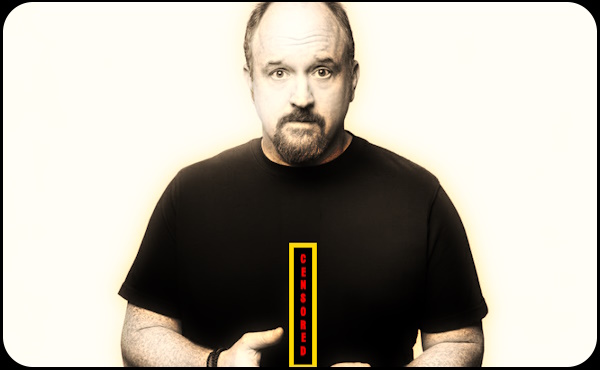 Posted a Commentary by Mikey Brewer The other day, I was thinking about Lewis C. K. and how he was cancelled for masterbating in front of two women after a show, backstage... Oh dear! Even if these women were deeply offended, why did they remain until the very end? I guess to see the money shot, of course... I don't see why we're all so shocked, though. We've all enjoyed his comedy over the years, so it shouldn't be a surprise that he is actually just like his comedy in real life. In my opinion, the masterbation session alone was rather mild in comparison to the topics his humor touched upon. Since we all laughed along with him, I suppose we should all be cancelled, because what's good for the goose is good for the gander, right? |
 Posted a Quote 4/2025 What He Said... |
 FIFTY SHADES OF HYPOCROCY Posted 3/2025 by Mikey Brewer Romance novels have long been a staple in popular culture, often referred to as "mommy porn" due to their focus on emotional and intimate fantasies. But are these stories really any different from more explicit content often consumed by men, like pornography? The lines between emotional and physical desires may be more blurred than we think. Below, we'll explore how romance novels and pornography function similarly, the nature of female and male fantasies, and the societal double standards that contribute to the perception of "mommy porn being acceptable." Both romance novels and traditional pornography are designed to fulfill a similar purpose: stimulating desire. Romance novels do this through intricate storytelling and deeply developed emotional connections between characters. They often highlight love, affection, and passion, with steamy scenes woven into the narrative as a culmination of the characters' feelings. In contrast, pornography often focuses on the physical act itself, providing a more direct and visual approach to sexual arousal. But at their core, both serve as outlets for desire. Romance novels may evoke a feeling of intimacy and longing in their readers, while pornography caters more to the visual and immediate. Essentially, they both explore fantasies, but in different ways. The key difference lies in how society has chosen to perceive and judge these expressions of desire. Much of the debate centers around the claim that women's imagination is fundamentally different from men's visual desires. But is that really true? When women read romance novels, they immerse themselves in scenarios that trigger a mental response. The detailed descriptions, character development, and deep emotional connections in these novels are all crafted to stimulate a woman's mind and emotions. This mental engagement is not so different from how a man might engage visually with explicit content, finding pleasure in the images presented. For men, visual cues can trigger arousal quickly, while for many women, the emotional journey and the mental landscape set by a romance novel can be equally compelling. In both cases, the end goal is the same: a heightened state of desire and satisfaction. To claim that one is more "pure" or "valid" than the other dismisses the fact that both are simply different expressions of human sexuality. One crucial distinction often made between romance novels and traditional pornography is the element of exploitation. In pornography, concerns about the exploitation of actors and unethical production practices are valid and widespread. There are numerous cases where people in the industry have been subjected to unfair treatment, coercion, and lack of consent. This creates a moral dimension to the consumption of such content that cannot be ignored. In contrast, romance novels are works of fiction - no one is physically involved or harmed in their creation. The authors have full control over their characters and stories, and readers engage with these fantasies in the privacy of their own imaginations. For many, this makes the consumption of romance novels a less morally fraught activity, providing a way to explore desires without contributing to an industry that may have ethical issues. However, it's important to note that romance novels can still perpetuate unrealistic ideals about love, relationships, and desire, much like how pornography often portrays unrealistic depictions of sex. Both have the potential to shape expectations that may not align with reality, though their impacts differ in how they manifest in the lives of their consumers. Romance novels and traditional pornography are both outlets for human fantasy, and each serves a unique purpose in the realm of desire. The double standards applied to these forms of entertainment highlight broader societal issues regarding how male and female sexualities are perceived and judged. By understanding the similarities between them and challenging the existing stereotypes, we can move toward a more inclusive view of human desire - one where fantasies, whether visual or imaginative, are not subject to judgment but are accepted as natural expressions of human curiosity and passion. |
 Posted 2/2025 by Mikey Brewer
|
 UNVEILING THE DARK LEGACY OF MK-ULTRA Posted 1/2025 by Mikey Brewer The pursuit of power and control has often led humanity down dark and morally ambiguous paths. One such chapter in history is the clandestine project known as MK-Ultra, orchestrated by the Central Intelligence Agency (CIA) during the Cold War era. Born from the fear of ideological adversaries harnessing the power of mind control to propagate their agendas, MK-Ultra exemplifies the lengths to which governments were willing to go in the name of national security. However, beneath the guise of scientific advancement and national defense lay a harrowing tale of unethical experimentation, human rights violations, and the exploitation of vulnerable individuals. At its core, MK-Ultra was driven by the fantasy of brainwashing, a concept steeped in the desire for optimization and efficiency. Traditional methods of interrogation, such as torture, were deemed too slow and unreliable for the fast-paced demands of the Cold War landscape. The allure of a scientifically informed approach to interrogation, capable of swiftly extracting information and manipulating behavior, proved irresistible to intelligence agencies. Thus, MK-Ultra was conceived as a multi-faceted initiative encompassing research into memory wiping, mind control, and the development of so-called "truth serum" drugs. The operational scope of MK-Ultra extended far beyond the confines of ethical boundaries. Projects like "Operation Midnight Climax" in San Francisco and the experiments conducted by psychologist Donald Cameron at McGill University epitomized the depths to which the CIA was willing to descend in its quest for control. In the former, unsuspecting American men were lured into scenarios involving LSD dosing by CIA-employed sex workers, all under the guise of covert observation. Meanwhile, at McGill University, Cameron subjected patients with mental illness to a combination of drugs and electroconvulsive therapy, in a misguided attempt to erase and "repattern" their minds. The aftermath of such experiments left lasting scars on the victims, with many suffering from amnesia for years. The revelations of MK-Ultra's existence, unveiled during the mid-1970s by the Church Committee hearings, shook the public's faith in governmental institutions and sparked a re-evaluation of the ethical boundaries of scientific research. The acknowledgment that the CIA had not only engaged in covert experimentation on American citizens but also funded the torment of vulnerable individuals in Canada shattered the illusion of trust between the government and its citizens. Moreover, the legacy of MK-Ultra continues to haunt discussions surrounding interrogation techniques and the ethical responsibilities of scientists and policymakers alike. In hindsight, the tale of MK-Ultra serves as a cautionary reminder of the dangers inherent in the unchecked pursuit of power and control. |

Copyright Disclaimer